
You said one thing, and they heard something completely different. Or you said nothing at all, and the silence grew louder than any argument. If that sounds familiar, you’re not doing relationships wrong. Most of us were simply never taught how to communicate.
Why communication breaks down
Most misunderstandings aren’t caused by bad intentions. They come from habits we don’t notice: assuming we know what the other person means, expecting people to guess what we need, replying while emotional, or listening only to prepare our answer. Many of these habits were learned in the homes we grew up in, and we carry them into our friendships, families, workplaces and love lives.
The good news is that communication is a skill, and skills can be learned at any age.
Know your style
Most people lean toward one of four styles. Passive communicators stay quiet to keep the peace. Aggressive communicators blame or raise their voice. Passive-aggressive communicators use sarcasm, hints or silence. Assertive communicators are honest and respectful at the same time. Assertive is the healthiest style, and anyone can grow toward it.
Three simple ways to start
- Use “I” statements. Instead of “You never listen to me,” try “When I’m talking and you look at your phone, I feel unimportant. I would like your full attention for a few minutes.” Describing your experience lets the other person hear you without feeling attacked.
- Listen to understand. Put your phone down, let the person finish, and reflect back what you heard: “So you felt left out when the plans changed. Is that right?” People relax when they feel truly heard.
- Pause before you react. When emotions are high, take a slow breath, and if you need to, ask for a break: “I need 20 minutes, and then I would like to continue.” A break only helps when you promise to come back.
Repair matters most
Every relationship has hurts and misunderstandings. What matters isn’t avoiding them, but repairing them. A sincere apology names what happened, acknowledges its impact, takes responsibility without excuses, and offers a change. Done well, a repair can bring people closer than before.
Go deeper with the workbook
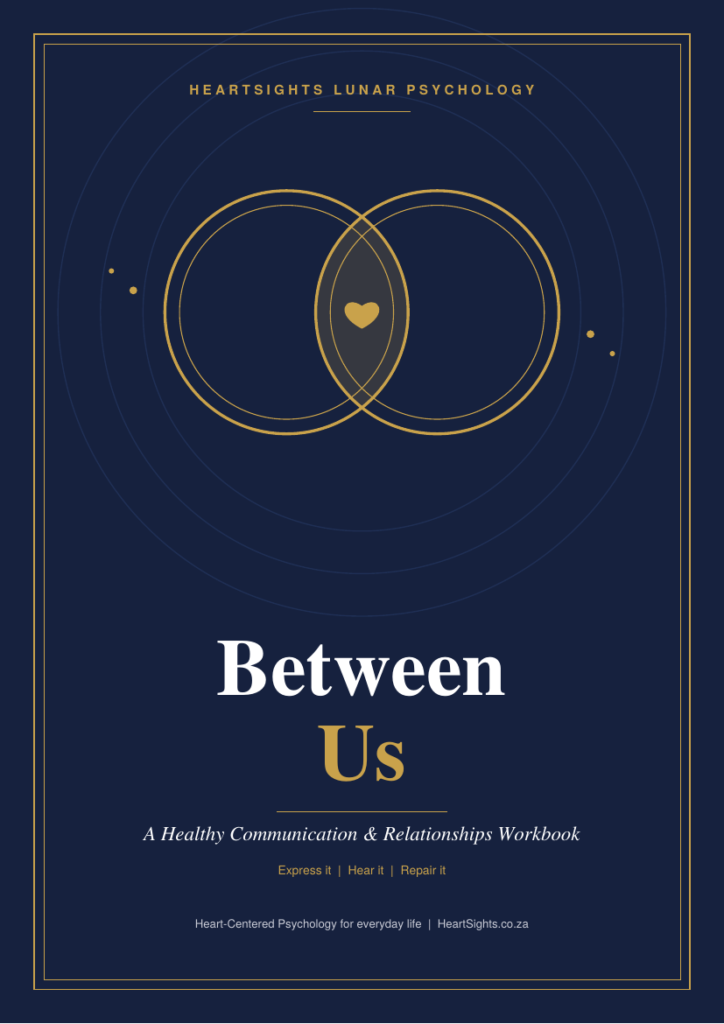
Between Us: A Healthy Communication & Relationships Workbook walks you through all of this step by step. Inside you’ll find worksheets on your communication style, “I” statements and clear requests, an active listening practice page, a conflict conversation planner, guidance on apologising and repairing, a relationship check-up, a 7-day tracker and your own personal communication plan. It’s a 25-page printable PDF with instant digital download.
Get Between Us here
This article is for education and self-reflection and is not a substitute for professional support. If a relationship leaves you feeling afraid, controlled or repeatedly hurt, please speak with a registered mental health professional or a trusted support service.