
It’s late. You’re tired, but your mind is replaying a conversation from this morning, or rehearsing a meeting that hasn’t happened yet. If that sounds familiar, you’re not alone, and you’re not broken.
Why we overthink
Overthinking usually begins as protection. Your mind is trying to keep you safe by scanning for problems, preparing for what could go wrong, and searching for certainty. The trouble starts when the scanning never switches off. Thinking feels productive, so we keep doing it, but repeating a worry is not the same as solving it.
The overthinking cycle
Most spirals follow a pattern: a trigger, a thought, a feeling, a response in your body, and then more thinking. Each time you replay a worry, your brain learns that it deserves attention, so the habit grows stronger. The good news is that habits can be retrained with practice.
Three gentle ways to step out
- Name it. Say to yourself, “I’m overthinking right now.” Noticing creates a little space between you and the thought.
- Slow your breath. Breathe in for 4 and out for 6, three times. A longer out-breath helps your body settle.
- Give worries a window. Choose 15 minutes a day to think about your worries. When one appears at other times, jot it down and tell yourself, “Not now, I’ll come back to it at my window.”
Keeping your calm
A calmer mind isn’t a place you arrive at once. It’s a practice. Old habits can return when you’re stressed or tired, and that’s normal. Progress means catching the spiral sooner and recovering faster, not never overthinking again.
Go deeper with the workbook
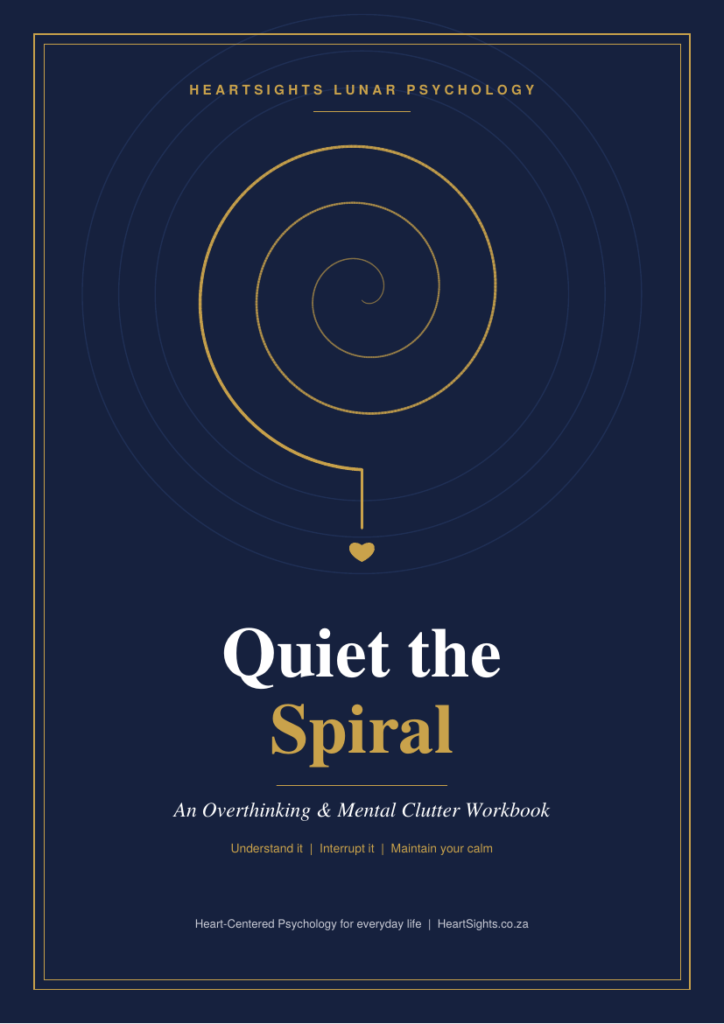
Quiet the Spiral: An Overthinking & Mental Clutter Workbook walks you through all of this step by step. Inside you’ll find trigger and thought-pattern worksheets, tools to interrupt spirals, a 7-day thought tracker, and a personal calm plan you can return to whenever you need it. It’s a 23-page printable PDF with instant digital download.
Get Quiet the Spiral here
This article is for education and self-reflection and is not a substitute for professional mental health support. If overthinking is affecting your sleep, daily life or wellbeing, please speak with a registered mental health professional.